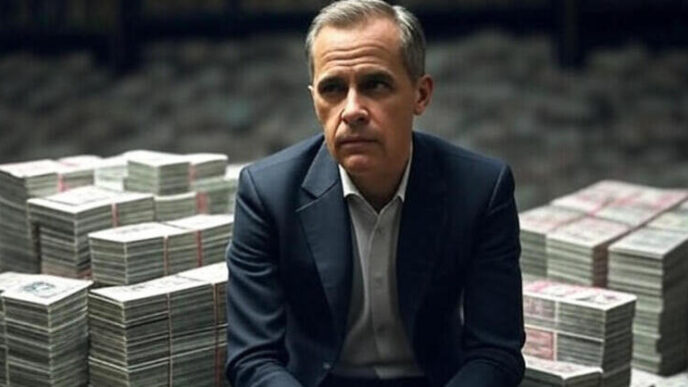
In April 2025, Prime Minister Mark Carney, a former central banker turned Liberal leader, unveiled a $150 million increase in annual CBC funding, bringing taxpayer contributions to roughly $1.55 billion per year. Ostensibly justified as a bulwark against disinformation and a means to preserve Canadian cultural identity, this commitment comes at a time when CBC’s core business model is increasingly antiquated, its audience dwindling, and its leadership struggling to align public expectations with internal practices.
An Outmoded Model in a Streaming World
CBC remains heavily reliant on traditional broadcast infrastructure, even as media consumption shifts online. According to its 2023 financials, CBC continues operating over‑the‑air television and radio services whose impact is marginal: a vast chunk of Canadians now turn to digital platforms, streaming and private broadcasters for news and entertainment. Despite years of digital strategy, CBC still pours capital into linear networks that generate declining viewership.
Carney’s pledge gives fresh life to a model increasingly out of touch with consumer trends. Investing in legacy broadcast networks today risks locking public funds into declining assets rather than investing in modern, efficient digital journalism or innovative platforms where younger Canadians actually engage. 
Executive Bonuses Show Taxpayer Disrespect
The funding boost is especially tone‑deaf given ongoing controversies around executive compensation. For the 2023–24 fiscal year, CBC awarded approximately $18.4 million in performance pay to nearly 1,200 employees – including senior leadership. Although the bonus system has been officially eliminated (wink wink), base pay for executives is rising, Catherine Tait, former CBC president, earned between $472,900 and $623,900 including perks. Her replacement, Marie‑Philippe Bouchard, is set to earn a similar executive salary. These figures stand in stark contrast to CBC’s claimed financial shortfalls and scheduled cuts to front‑line programming and jobs.
For fiscal 2024–25, CBC’s public funding is projected around $1.4 billion; even after securing that additional $150 million from Carney’s commitment, the corporation expects deep job losses if costs are not reined in. Yet executive compensation continues unhindered. The optics are poor, and for taxpayers already feeling stretched by inflation and rising costs, funding a bloated broadcaster that rewards top executives amid austerity sends the wrong message.
Carney’s Overreach in Enshrining CBC Funding
Carney’s proposal goes beyond the annual budget process: he intends to anchor CBC’s funding and mandate into legislation, removing it from routine parliamentary scrutiny. This suggests a move toward a quasi‑permanent subsidy structure, insulating CBC from future accountability. For taxpayers and conservative voters who value government restraint, this is deeply troubling.
Once funding is embedded in law, it can become near impossible to cut, even when outcomes fail to justify cost. Carney is essentially building a financial firewall around CBC, just as public sentiment tilts toward reducing its role and relevance.
Declining Viewership and Questionable Value
CBC pays immense sums without delivering proportional reach. According to critics, only a fraction of Canadians actively consume CBC content, yet nearly all bear its cost. Private competitors, such as Global, Citytv, CTV, deliver higher ratings and are subject to market discipline, whereas CBC’s status as a public broadcaster enables it to operate with minimal performance pressure.
Cartoons, regional radio, sports rights, slow‑growth documentaries: these are no longer compelling draws in a media ecosystem led by Netflix, Amazon, YouTube, and other nimble digital competitors. Carney’s approach retains the status quo at vast cost while shirking genuine reform.
Travis Dhanraj’s Warning: Ideological Conformity Over Balance
Recent whistleblower allegations by former CBC host Travis Dhanraj offer insight into deeper institutional problems. Dhanraj resigned in mid‑2025 after claiming he was “silenced” and ultimately forced out after raising concerns about editorial imbalance and lack of conservative voices. Leaked internal audio showed managers reproaching him over a tweet that criticized Catherine Tait for refusing to appear on his show, a refusal likely tied to safeguarding executive image rather than serving journalistic transparency.
Carney’s Choice: Growth Over Reform
Mark Carney’s plan affirms that he sees CBC not as a troubled institution to be reformed or disciplined, but as a vital national asset in need of resources and legal protection. From an economic and reality-based standpoint, that’s mistaken.
Rather than encouraging innovation, digital transition, or structural efficiency, he is doubling down, rewarding outdated infrastructure and permitting executive excess. Conservatives and fiscal moderates expect better stewardship: they want public institutions to justify cost, serve a wide public audience, treat taxpayers with respect, and maintain editorial balance. CBC, as currently structured and run, fails on multiple counts.
What Should Come Next
Though the Conservatives have promised to defund the CBC, they are not in control of Canada’s government at the moment. Here’s what Parliamentarians should demand in the interim.
Demand Reform First
Before any more funding, CBC should be required to produce a detailed transition plan adapting to digital platforms, with clear metrics on reach, cost‑effectiveness, and public engagement.
Standardize Executive Compensation
Bonuses and rising base pay at the top should be frozen, or subjected to independent audit and public reporting. No more perfunctory pay hikes while the rank‑and‑file or programming is cut.
Mandate Editorial Neutrality
Introduce oversight to ensure CBC fairly includes conservative perspectives. The Dhanraj case suggests a willingness to suppress such voices. Parliament should demand transparency and balance.
Return Funding to Annual Vote
Rather than locking in funding with legislation, bring CBC’s subsidy back into the regular budget process with full debate and annual review, ensuring accountability.
Carney makes his choice
Mark Carney’s promise to boost CBC’s budget may appeal to his Liberal base; but for average Canadians, it smacks of misplaced priorities: propping up an antiquated broadcast model, rewarding executive excess, entrenching funding beyond democratic oversight, and sidelining dissenting opinion within the organization itself.
Travis Dhanraj’s recent criticism of Catherine Tait reveals an institution that may be less independent than ideal, and certainly less accountable. If Canadian taxpayers are to continue supporting a public broadcaster, it must be thoroughly modernized, genuinely impartial, efficient, and subject to competitive pressure. Expanding CBC in its current form fails that test.