
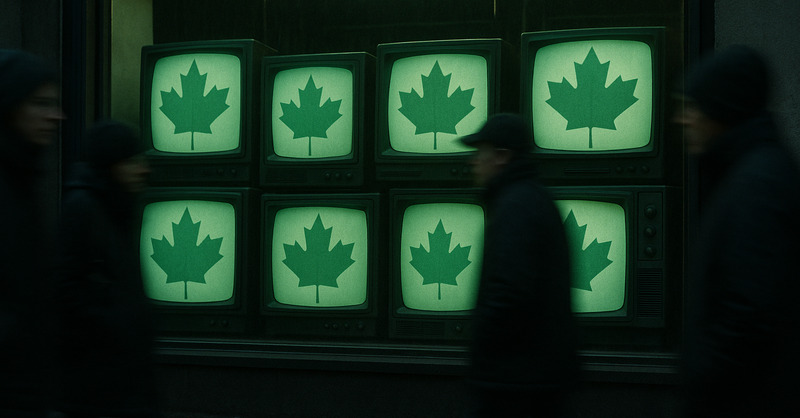
Every few years, the Canadian Radio-television and Telecommunications Commission finds itself peering into its own navel, asking what it means to be “Canadian” and how to legislate it into our TV shows, films, and music. This time, the regulator is toying with adding a “cultural element” to its definition of Canadian content. And once again, the conversation risks sliding from legitimate support for Canadian creative work into paternalistic gatekeeping, where a small group of elite tastemakers in Ottawa and Toronto decide what “counts” as authentically Canadian.
The Public Interest Advocacy Centre got it right when it told the CRTC in May that such an approach is “highly problematic.” It’s not just that “cultural element” rules are inherently subjective — they almost always end up reflecting the sensibilities of a narrow cultural elite. In practice, this means an urban, central Canadian definition of “Canadian culture” that alienates large swaths of the country and ignores the content Canadians actually want to watch.
The Myth of a Neutral Cultural Test
The CRTC seems to imagine that a “cultural test” could be applied in some fair, objective way. But who gets to decide what’s Canadian enough? If Britain has a whole institute devoted to deciding whether something is “sufficiently British,” that should be less an inspiration than a cautionary tale. The U.K.’s system inevitably reflects the perspectives of London’s cultural elites. In Canada, it would be the same — Ottawa bureaucrats, CBC programmers, and industry insiders judging our national identity by their own tastes and political values. 
As PIAC warned, these rules would also invite parody and exploitation. We’ve all seen the paper-thin maple-washing in foreign productions — a toque here, a hockey reference there, maybe an actor saying “sorry” in a slightly higher pitch. Under a “cultural element” test, these token gestures might actually become currency. The risk is that instead of supporting real storytelling, we get a flood of caricatured “Canadian” content cooked up in American boardrooms to rack up Canadian taxpayer cash.
What Canadians Actually Want
The whole premise of cultural CanCon rules is that Canadians need to be protected from foreign cultural domination, that we are passive consumers who must be shielded from our own preferences. But that’s not how culture works anymore, if it ever did. Today’s Canadians, from Corner Brook to Kelowna, have varied tastes and infinite choice. We stream Korean dramas, American procedurals, British mysteries, and yes, Canadian shows, when they’re good. The common denominator isn’t nationality; it’s quality and appeal.
If a Canadian production is compelling, people will watch it, no “cultural test” required. Corner Gas and Schitt’s Creek didn’t succeed because the CRTC told us they were good for us. They succeeded because audiences found them funny, relatable, and well-made. By contrast, many government-blessed productions, painstakingly certified as Canadian, vanish without a trace because they were made for the approval of juries and regulators, not audiences.
The Elite Bias Problem
The deeper problem with the “cultural element” approach is that it inevitably privileges the worldview of central Canadian urban elites. When regulators and arts councils talk about “reflecting Canadian culture,” they tend to mean the culture of Toronto’s Annex neighbourhood, Ottawa’s Glebe, and Montreal’s Plateau – not the oil patch in Alberta, the fishing towns of Newfoundland, or the mining communities of Northern Ontario.
That’s why, when “Canadian identity” is defined from the top down, it almost always ends up looking like an extended Heritage Minute about a prime minister, an abstract meditation on urban alienation, or a self-serious drama about social issues favoured by the arts-funding class. There’s nothing (technically) wrong with those stories, but they are not the only Canadian stories. And they certainly shouldn’t be imposed as the definition of what’s worthy of support.
In fact, some of Canada’s most successful cultural exports, from The Trailer Park Boys to Orphan Black, thrive precisely because they sidestep the official definition of “Canadian” and connect with audiences on their own terms.
Market Demand Is Not the Enemy
Cultural protectionists often treat market demand as if it were some crass enemy of art. But market demand is simply a reflection of what people actually enjoy and value. If Canadian creators make content that resonates, whether that’s a documentary about Arctic exploration, a Quebec comedy, or a Calgary-produced crime thriller, audiences will find it. And in a world where streaming platforms are global, a show made in Vancouver for a Canadian audience can also find fans in Melbourne, Madrid, or Mumbai.
The goal shouldn’t be to engineer Canadian tastes from above, but to enable Canadian creators to compete and thrive in the global market. That means ensuring access to funding, encouraging private investment, and clearing away the red tape that makes Canadian production more about passing bureaucratic tests than about making something people want to watch.
The Real Risk: Cultural Stagnation
Ironically, the biggest threat to Canadian culture may be overzealous attempts to preserve it. When regulators define CanCon not by who makes it, but by whether it meets some ideological or aesthetic checklist, they discourage innovation. They push creators toward safe, approved formulas and away from risk-taking.
We’ve seen this movie before. In the music world, CanCon rules have sometimes resulted in playlists padded with Canadian tracks that meet the letter of the law but not the spirit – songs that check the boxes without finding an audience. The same dynamic in film and television would mean fewer breakout hits and more taxpayer-funded obscurities.
The Streaming Era Reality
The debate is also increasingly out of touch with how content is made and consumed in the streaming era. The CRTC has already moved to make foreign streaming services contribute to Canadian production funds – a policy that has prompted legal challenges from Netflix, Amazon, and others. But whether or not that policy stands, it makes no sense to double down with an even narrower cultural test that would make less content eligible for support.
In practice, this will not force big streamers to make more “culturally Canadian” content; it will just make them less likely to bother producing anything here at all. And as DAZN’s vice-president warned, overly prescriptive levies and definitions can make Canada a less attractive place to invest.
A Better Path Forward
If the goal is to strengthen Canadian culture, the answer is not to create a new bureaucracy of cultural inspectors. It is to make Canada a place where content creators want to tell Canadian stories because the environment is welcoming, the talent is here, and the audience is enthusiastic.
That means removing barriers to production and on ensuring that Canadian talent can participate in global projects. It means embracing co-productions and partnerships without worrying about whether a script has enough “cultural elements” to pass an arbitrary test.
Above all, it means trusting Canadians to decide for themselves what reflects their culture. We do not need an official stamp to tell us when something is ours.
Back off, CRTC
The CRTC’s flirtation with a “cultural element” definition of Canadian content is a step backward, toward a paternalistic model where a small elite defines national identity for everyone else. In a diverse, decentralized country, that’s a recipe for irrelevance. Canadian culture is not a fragile plant that must be sheltered under glass; it is a sprawling, hardy forest that grows wherever Canadians are making things they care about.
If we want it to thrive, we should stop trying to prune it into the shape preferred by Ottawa and Toronto insiders. Let Canadians create what they want. Let audiences decide what they want to watch. And let “Canadian content” be defined not by regulation, but by the creative energy of the people who live here.